
Here’s How the Alberta Wildfires Are Impacting Investments in the Energy Sector
Here's how the larger oil extraction and energy stocks are being affected by the wildfires and why this time is different than 2016.

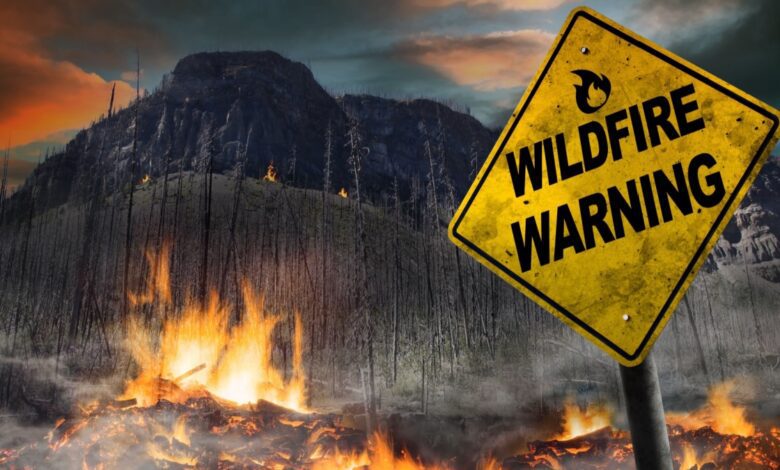
As wildfires continue to engulf Alberta, oil and gas producers in the region are temporarily suspending production to ensure the safety of their personnel and assets. Over 100 active fires have led to a provincial state of emergency, forcing companies operating in the western and northwestern parts of the province to halt operations.
Major producer Crescent Point Energy (NYSE: CPG) (TSX: CPG), with significant operations in the Kaybob Duvernay light oil play, confirmed it has temporarily shut in production of around 45,000 barrels of oil equivalent per day. The move is a precautionary measure to safeguard staff, the community, the environment, and company assets.
In a similar move, Vermilion Energy (NYSE: VET) (TSX: VET) has halted about 30,000 barrels per day. In comparison, Paramount Resources (TSX: POU) (OTC: PRMRF) has temporarily curtailed about 50,000 barrels per day in the Grande Prairie and Kaybob regions. Canada’s largest natural gas producer, Tourmaline Oil (TSX: TOU) (OTC: TRMLF), has shut down nine regional gas processing facilities. Cenovus Energy (NYSE: CVE) (TSX: CVE) and TC Energy (NYSE: TRP) (TSX: TRP) have also shut down production and operations in response to the crisis.
Long-Term Ramifications for the Canadian Oil and Gas Sector
While the Trans Mountain pipeline and its expansion project remain unaffected for now, the wildfire situation in Alberta is rapidly evolving, creating uncertainty around the extent of oil and gas production curtailments. Rory Johnston, a Toronto-based energy analyst, suggests that the current scenario might be only temporary, unlike the Fort McMurray wildfire in 2016, which led to a 14% decline in crude oil exports from Alberta.
However, Johnston warns that the increasing prevalence of wildfires poses a significant risk to the Canadian oil and gas industry, particularly as the industry expands and wildfire activity continues to rise.
Other affected companies investors should watch out for include Pipestone Energy (TSX: PIPE), Kiwetinohk Energy (TSX: KEC) (OTC: KWTEF), Whitecap Resources (TSX: WCP) (OTC: WCPRF), Baytex Energy (NYSE: BTE) (TSX: BTE), and NuVista Energy (TSX: NVA) (OTC: NUVSF). Pembina Pipeline (NYSE: PBA) (TSX: PPL) has shut down its Saturn I and II gas plants with a combined processing capacity of 443 million cubic feet of natural gas per day.
As the companies continue to assess the impact of these fires on their operations, the long-term impact on Alberta’s oil and gas sector, and hence on investors, remains uncertain.
Read Next: Why Nvidia’s Tech Investments Could Transform the Entire AI Innovation Ecosystem
Join the Discussion in the WVC Facebook Investor Group
Do you have a stock tip or news story suggestion? Please email us at: invest@wealthyvc.com.
Disclaimer: Wealthy VC does not hold a position in any of the stocks, ETFs or cryptocurrencies mentioned in this article.