Why Oil Could Be Headed to $200 a Barrel as Iran Ramps Up Attacks on Persian Gulf Shipping
With 20% of the world’s oil supply held hostage in the Strait of Hormuz, a record emergency release might not be enough to stop the surge.

Imagine the world’s energy supply as a massive plumbing system. Now, imagine someone just shut the main valve. That is essentially the reality at the Strait of Hormuz, a narrow waterway where roughly 20% of global oil and gas flows normally pass. Since the U.S. and Israel launched Operation Epic Fury against Iran on February 28, that valve has been cranked nearly shut.
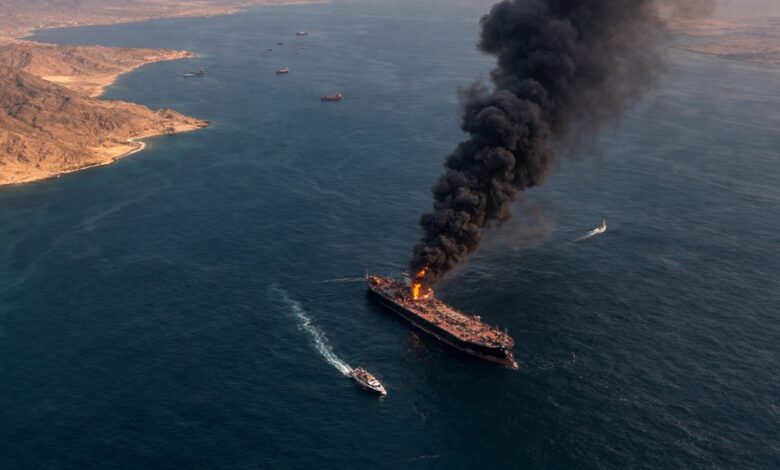
Overnight, the crisis intensified. Three more foreign vessels were struck off the coasts of Iraq and the United Arab Emirates. A container ship near Jebel Ali sustained damage from an unknown projectile, while two tankers near the Iraqi port of Umm Qasr were left ablaze. This brings the total number of merchant ships struck since the conflict began to 14. Shipping traffic through the region has ground to a virtual halt as Iran retaliates against airstrikes by targeting any vessel attempting to run the gauntlet.
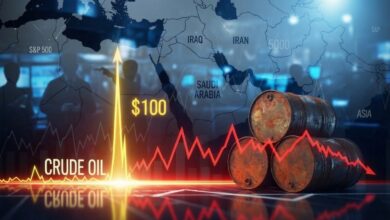
The market response has been swift. International benchmark Brent Crude (BZ) futures recently touched $120 per barrel, a far cry from the $70 price tag seen before the hostilities. In the halls of Tehran, the rhetoric is even sharper.
Ebrahim Zolfaqari, a spokesperson for Iran’s military command, issued a blunt warning:
“Get ready for oil to be $200 a barrel, because the oil price depends on regional security, which you have destabilised.”
While that might sound like hyperbole, the mathematics of a prolonged blockade suggest he might not be entirely wrong.
The Math Behind the Strait of Hormuz
When traders look at the Strait of Hormuz, they see more than just water; they see 15 to 20 million barrels per day (mb/d) of crude. This volume represents an air pocket in the global supply chain that is nearly impossible to fill. Rory Johnston of Commodity Context notes that the shutdown is removing massive volumes primarily destined for Asia, forcing the world into aggressive inventory draws.
The International Energy Agency (IEA) attempted to calm the nerves of the market on Wednesday by announcing the largest emergency release in its history, 400 million barrels. To put that in perspective, it is more than double the volume released after the 2022 invasion of Ukraine. The U.S. alone will contribute 172 million barrels from its Strategic Petroleum Reserve.
However, many analysts view this as a temporary fix. Energy analyst Saul Kavonic described the move as a signal of how acute the shortage risk truly is. If the Hormuz shutdown removes 20 mb/d, a 400-million-barrel release only covers 20 days of that missing volume. It is what industry veteran Neil Crosby calls “a little Band-Aid” on a gaping wound. For prices to stabilize sustainably, the oil needs to flow through the Strait again. Until that happens, the market remains in a state of high-octane panic.
Canadian Oil Sands Windfall
While high prices hurt consumers at the pump, they are creating a substantial revenue surge for Western Canada. Alberta, which was projecting a $10 billion deficit, could see that gap turn into a surplus if prices average $90 over the year. Each $10 increase per barrel translates into roughly $2 billion in additional federal revenue for Canada.
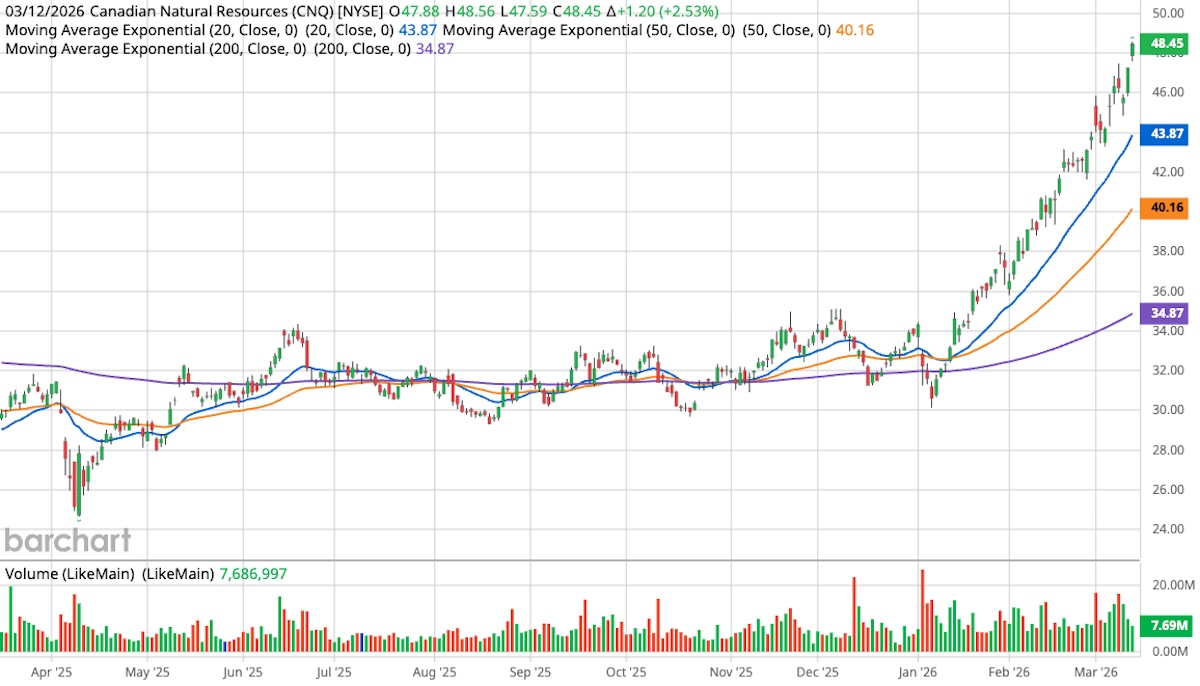
Equity markets are already pricing in this advantage. Cenovus Energy (NYSE: CVE) (TSX: CVE) and Canadian Natural Resources (TSX: CNQ) (NYSE: CNQ) have become favorites for investors looking to play the West Texas Intermediate (WTI) price spike. On Tuesday, analysts at Veritas Investment upgraded Cenovus to a “strong buy,” noting its high leverage to the current price environment. Both companies have seen their valuations increase by nearly 40% in 2026.
However, not every Canadian major plays the same way. If you are worried about a sudden de-escalation causing prices to crater, Suncor (TSX: SU) (NYSE: SU) offers a different profile. Suncor’s extensive downstream refining operations provide a crack spread cushion. When crude prices fall, refining margins often hold steady or improve, protecting the bottom line in a way that pure-play drillers cannot. Year-to-date, Suncor shares are up 31%.
Despite the enthusiasm, Canada faces a physical ceiling. Lisa Baiton, CEO of the Canadian Association of Petroleum Producers, warns that the industry is already at record production. With the Trans Mountain pipeline nearly 90% full, there is very little short-term ability to increase exports to global markets. Canada is a net exporter, but it is also a captive one.
Shifting Focus to South America
While the Middle East burns, some of the world’s largest energy players are looking toward Venezuela for relief. Chevron (NYSE: CVX) and Shell (NYSE: SHEL) are reportedly closing in on significant production deals with Caracas. This follows recent reforms in Venezuelan oil laws that allow foreign companies more control over exports.
Exxon Mobil (NYSE: XOM) and other integrated giants have also seen their shares climb as they pivot to assets outside the immediate conflict zone. Chevron, currently the lone U.S. producer with ongoing operations in Venezuela, could see its production volumes grow by 50% over the next two years.
This shift has also benefited oil-service firms. Baker Hughes (NASDAQ: BKR), Halliburton (NYSE: HAL), and SLB (NYSE: SLB) are all positioning themselves to capitalize on opportunities to revitalize infrastructure in more stable regions. While the Iran-Israel war dominates the headlines, these long-term plays represent a strategic hedge against Middle Eastern volatility.
Tollbooths of the Energy World
For the average investor, buying into a $100 barrel of oil feels like chasing a runaway train. Geopolitical spikes are historically short-lived; prices often subside the moment combat operations end. If you are looking for long-term stability rather than a speculative gamble, midstream stocks remain the tollbooth collectors of the industry.
Companies like Enterprise Products Partners (NYSE: EPD) and Enbridge (NYSE: ENB) operate on fee-based, long-term contracts. Their profits depend less on the price of the commodity and more on the volume of product moving through their pipes. With yields currently sitting above 5%, these stocks offer a way to benefit from the world’s continued dependence on oil without the stomach-churning volatility of crude futures.
The bottom line is that the global economy is still deeply tethered to the Persian Gulf. Until the U.S. Navy can guarantee safe passage through the Strait of Hormuz, the threat of $200 oil remains a shadow over global growth. We are currently witnessing the largest supply disruption in history, and while reserves can bridge the gap for a few months, they cannot replace the world’s most vital energy artery forever.
Read Next: Oil Pierces $100 in Whipsaw Session as Trump Comments Trigger Plunge
Subscribe to our Free Email Newsletter to receive our weekly in-depth market analysis and winning stock picks delivered directly to your inbox.
Join the Discussion in the WVC Facebook Investor Group
Do you have a stock tip or news story suggestion? Please email us at: invest@wealthyvc.com.
Disclaimer: Wealthy VC does not hold a position in any of the stocks, ETFs or cryptocurrencies mentioned in this article.