
What Michael Burry’s GameStop Bet Signals About the Company’s Future
Famed ‘Big Short’ investor likens CEO Ryan Cohen’s capital allocation to a young Warren Buffett as the retailer builds a multibillion-dollar cash pile.

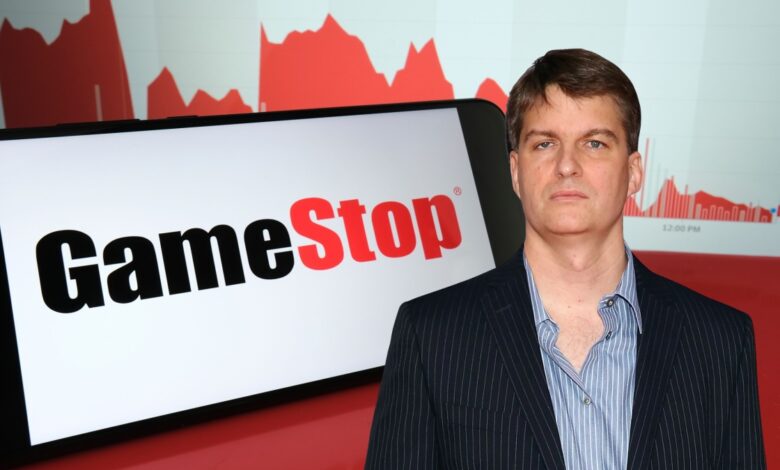
The video-game retailer GameStop (NYSE: GME) is once again attracting the attention of institutional and value investors, though for reasons that differ significantly from the speculative mania of 2021. Michael Burry, the Scion Asset Management founder known for his successful bet against the U.S. housing bubble, recently disclosed a long position in the company, sparking a renewed debate over its underlying valuation and long-term trajectory.
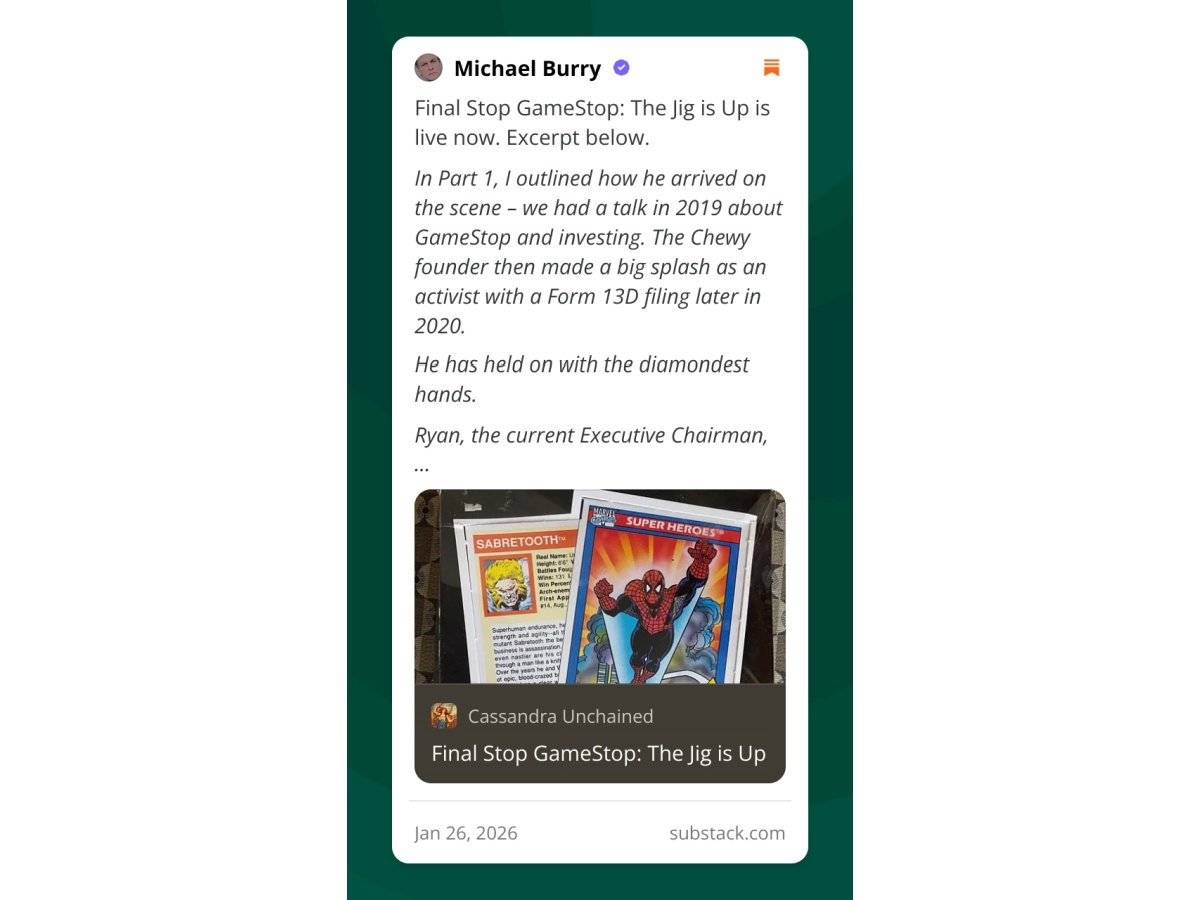
Burry’s return to the stock, which he famously exited just before the historic short squeeze five years ago, comes as GameStop’s core retail business continues to face secular headwinds. However, his investment thesis rests less on the selling of physical software and more on the company’s evolution into a vehicle for capital deployment. In a post on his Substack, “Cassandra Unchained,” Burry suggested that the market may be overlooking the asymmetric risk-reward profile presented by the company’s current balance sheet.
Pivot Toward Capital Allocation
The central pillar of the renewed bull case is CEO Ryan Cohen’s strategy of utilizing the company’s liquidity. Over the past several years, GameStop has leveraged periods of share-price volatility to raise billions in cash through equity offerings. This war chest has allowed the company to move beyond its traditional brick-and-mortar roots, which have seen better days. Third-quarter results illustrated the challenge: hardware and accessory sales fell 12% to $367.4 million, while software sales plummeted 27% to $197.5 million.
Despite the erosion of the core business, Burry sees a parallel between Cohen and the early career of Warren Buffett at Berkshire Hathaway (NYSE: BRK.A; BRK.B). Just as Buffett used the cash flows of a struggling textile mill to build a global conglomerate, Burry posits that Cohen is effectively using a declining retail operation to fund future ventures while waiting for a transformative acquisition.
Burry stated:
“Ryan is making lemonade out of lemons. He has a crappy business, and he is milking it best he can while taking advantage of the meme stock phenomenon to raise cash and wait for an opportunity to make a big buy of a real growing cash cow business.”
This holding-company ambition is supported by recent insider activity. Cohen purchased one million shares last week at prices just above $21, bringing his total stake to approximately 38.4 million shares. Board member Lawrence Cheng also added to his position, purchasing 5,000 shares for roughly $114,000. For Burry, these moves suggest a deep alignment between management and stockholders that is often absent in struggling retail firms.
Balancing Fundamentals and Volatility
While the investment from Burry provided a short-term catalyst, pushing shares up as much as 8.8% earlier this week, the stock remains a battleground for different investing philosophies. Skeptics point to the continued decline in total net sales, which fell 4.6% to $821 million in the third quarter, missing analyst estimates. The growth in collectibles, a segment that now accounts for 31% of revenue, has improved gross margins but has not yet fully offset the losses in the gaming divisions.
Furthermore, GameStop’s recent foray into digital assets has added a layer of volatility. The company currently holds 4,710 Bitcoin (BTCUSD), which was valued at $519.4 million at the end of Q3, when BTC was trading above $110,000, representing an unrealized gain of $19.4 million at the time.
However, subsequent price fluctuations in the crypto market and Bitcoin’s decline to around $84,500 have weighed on the stock’s perception among traditional value investors who prefer a focus on the core enterprise. Following a recent report by blockchain analytics firm CryptoQuant, it appears the company may actually be positioning to do just that. According to the report, GameStop transferred its entire Bitcoin holdings to Coinbase Prime, fueling speculation that the company may be looking to unwind its treasury strategy. Based on current market prices, a sale at these levels would see GameStop realize an estimated loss of as much as $85 million.
The stock’s inclusion in various exchange-traded funds also ensures that its price movements are tied to broader market mechanics. GameStop currently carries a 2.92% weight in the VanEck Social Sentiment ETF (NYSE: BUZZ) and a 1.54% weight in the SPDR S&P Retail ETF (NYSE: XRT). It is also a component of the AGF US Market Neutral Anti-Beta Fund ETF (NYSE: BTAL), where it holds a 0.47% weight. Inflows or outflows from these funds can trigger automated buying or selling of GME shares regardless of company-specific news.
Long-Term Valuation Play
Burry has been careful to distance his current position from the “meme stock” narrative that defined GameStop’s recent history. He noted that the stock is currently trading near one-times tangible book value, providing what he considers a floor for the valuation. Unlike the retail traders who sought to replicate the gains of stocks like AMC Entertainment (NYSE: AMC) or Opendoor (NASDAQ: OPEN), Burry indicated his timeline is measured in years, not days.
Burry wrote:
“I am not counting on a short squeeze to realize long-term value. I believe in Ryan, I like the setup, the governance, the strategy as I see it.”
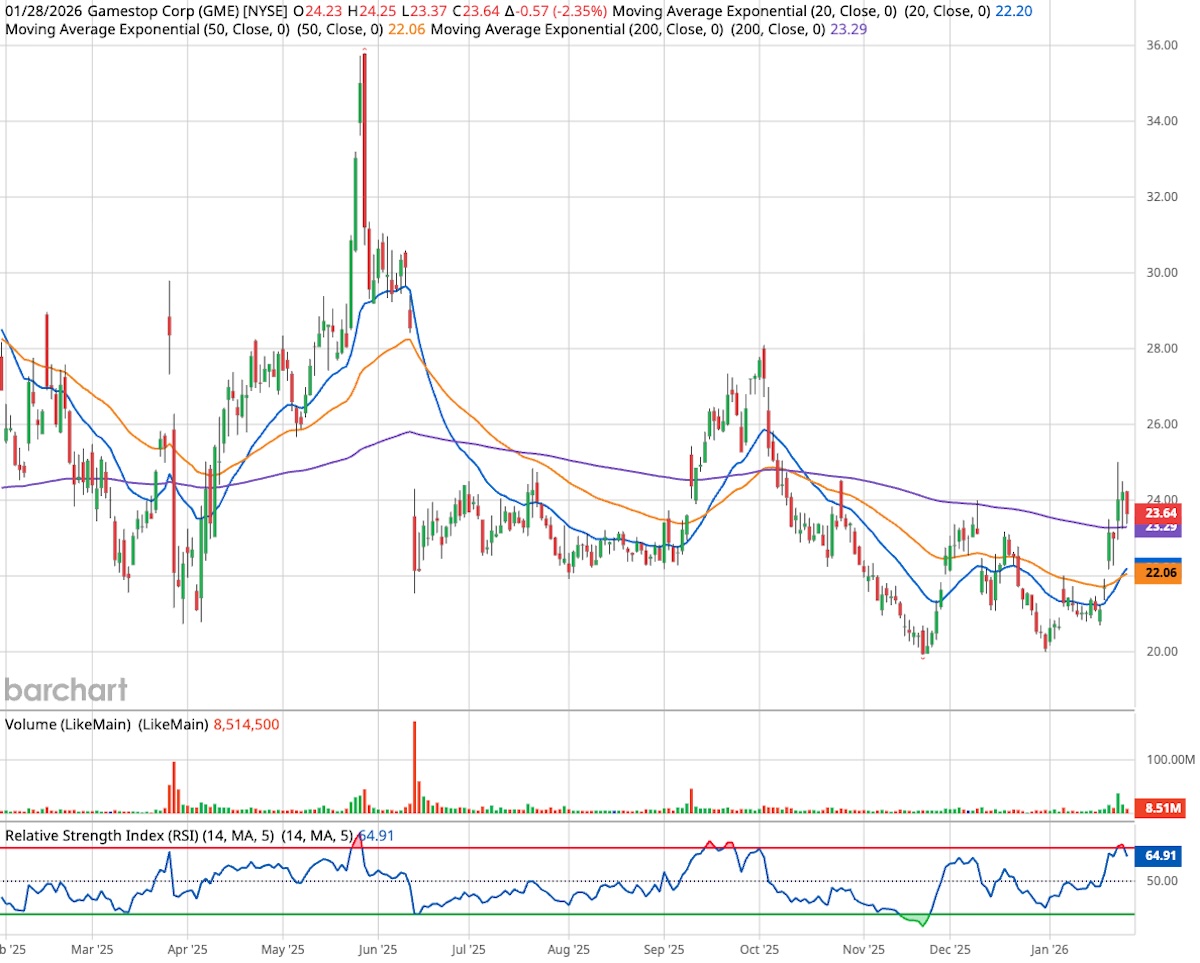
The market’s reaction to this long-term outlook remains mixed. On Wednesday, GameStop shares pulled back 2.35% to close at $23.64, as technical indicators, such as the Relative Strength Index (RSI), hovered near overbought territory. Some investors remain wary that the pivot to a holding-company model, reminiscent of the path taken by Cohen’s previous success with Chewy (NASDAQ: CHWY), will take longer than the market’s patience allows.
Ultimately, the bet by one of the world’s most watched value investors suggests that GameStop’s story has entered a new chapter. Whether Cohen can successfully execute a Buffett-style transformation remains the primary question for those following the stock. For now, the company holds a substantial cash reserve, waiting for the opportune moment to deploy it.
As Burry noted in his analysis: “With the downside protected by its tangible asset value, being long GameStop is almost as asymmetric as it gets these days in US common stocks.”
Read Next: ‘Big Short’ Investor Bets $1 Billion Against These 2 AI Giants
Join the Discussion in the WVC Facebook Investor Group
Do you have a stock tip or news story suggestion? Please email us at: invest@wealthyvc.com.
Disclaimer: Wealthy VC does not hold a position in any of the stocks, ETFs or cryptocurrencies mentioned in this article.