
Everything You Need to Know About Apple’s New $599 MacBook Neo
The new 13-inch laptop utilizes iPhone-class chips and targets the education market to compete with lower-cost rivals from Google and Microsoft.

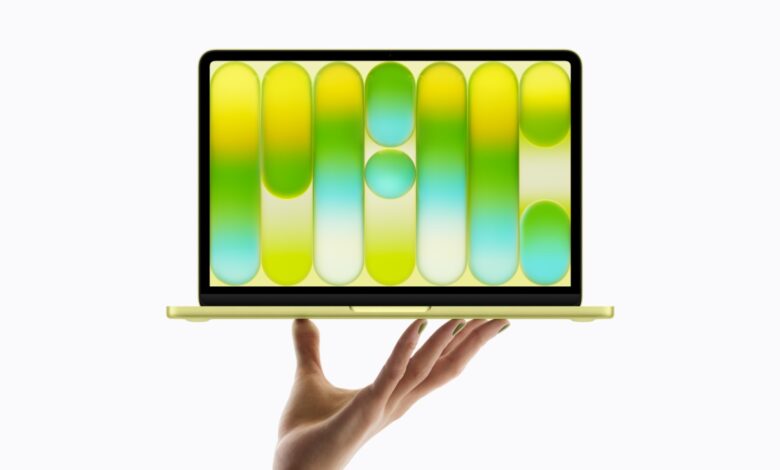
Apple (NASDAQ: AAPL) introduced the MacBook Neo on Wednesday, a 13-inch laptop starting at $599. The move represents the company’s most significant push into the budget personal computer market in nearly two decades, as it seeks to capture a larger share of the segment currently dominated by lower-priced alternatives. The device utilizes the A18 Pro chip, the same silicon found in the company’s iPhone 16 Pro models, marking the first time a consumer Mac has launched with an A-series processor rather than the M-series chips found in the MacBook Air and Pro lines.
The launch occurs amid a broader hardware refresh that includes updates to the iPhone 17e and the MacBook Pro lineup. By pricing the Neo at $599 and $499 for education customers, Apple is positioning the device to compete directly with Alphabet’s (NASDAQ: GOOGL) Google Chromebooks and entry-level Microsoft (NASDAQ: MSFT) Windows devices. These competitors have long maintained a stronghold in the classroom and among first-time buyers due to lower entry costs.
Technical Specs and Hardware Compromises
The MacBook Neo features a 13-inch Liquid Retina display with a 2408-by-1504 resolution and 500 nits of brightness. While these figures are comparable to the current MacBook Air, the Neo lacks several premium display technologies, including True Tone and a 120Hz ProMotion refresh rate. The display also utilizes thicker bezels and includes a 1080p FaceTime HD camera at the top, though it lacks the notch design found on higher-end models.
Internal configurations are limited compared to the rest of the Mac lineup. The base $599 model includes 8 gigabytes of unified memory and 256 gigabytes of solid-state storage. A $699 version doubles the storage to 512 gigabytes and adds a Touch ID sensor to the power button, a feature absent from the entry-level model. Notably, the memory remains fixed at 8 gigabytes across both configurations with no option for upgrades. This limitation comes during a global memory chip crunch that has seen hardware makers navigate fluctuating component costs.
Connectivity on the Neo consists of two USB-C ports and a 3.5mm headphone jack. The two USB-C ports are not identical; one supports USB 3 speeds up to 10Gb/s and DisplayPort 1.4, while the other is limited to USB 2 speeds of 480Mb/s. The device does not include a MagSafe charging port, requiring users to occupy one of the two USB-C ports for power. Furthermore, the Neo supports only one external display at up to 4K resolution at 60Hz.
Neo vs. Chromebooks and Budget Windows PCs
In targeting the entry-level segment, Apple is challenging the established dominance of Chromebooks and budget Windows PCs in educational and consumer environments. While many budget Windows machines in the $500 to $600 range utilize Intel Core Ultra 5 processors, Apple claims the A18 Pro chip in the Neo delivers up to 50 percent faster performance for everyday tasks like web browsing. Furthermore, for on-device artificial intelligence workloads, such as photo effects or note summarization, Apple asserts the Neo is up to three times faster than the bestselling PC with the latest shipping Intel Core Ultra 5.
Hardware benchmarks also highlight differences in display and audio quality. Many budget Windows laptops at this price point utilize displays with lower brightness and color accuracy; in direct comparisons with similarly priced HP models, the Neo’s 500-nit screen was noted for being significantly more vibrant. Similarly, while entry-level PC laptops often feature tinny audio output, the Neo incorporates dual side-firing speakers with spatial audio support, providing a depth of sound typically reserved for more expensive ultraportables.
However, the Windows and ChromeOS ecosystems offer advantages in flexibility that the Neo lacks. Many entry-level Windows devices allow for memory or storage upgrades after purchase, whereas the Neo is strictly limited to 8 gigabytes of RAM. Additionally, while the Neo is restricted to a single external monitor, competing Windows laptops often support multi-monitor setups natively, a feature that may appeal to users requiring more screen real estate for productivity.
Market Positioning and Competition
The introduction of a $599 laptop follows a period of softening demand in the PC sector. Mac revenue decreased nearly 7% to $8.39 billion in the most recent holiday quarter, falling short of the $9 billion analysts had anticipated. This decline coincided with price increases for the rest of the MacBook lineup; the M5-based MacBook Air now starts at $1,099, while some MacBook Pro models saw price hikes as high as $400.
Industry analysts suggest the Neo is designed to bridge the gap for users who have previously been priced out of the macOS ecosystem. Francisco Jeronimo, vice president of client devices at IDC, noted the strategic challenge facing the company with this launch.
Jeronimo stated:
“The real question is not whether Apple can sell a MacBook at this price (because it will be one of the most sold Macs ever if they can deliver), but how it balances cost, performance and brand positioning while maintaining the premium experience that defines the Mac.”
Apple is highlighting the device’s ability to handle artificial intelligence tasks, claiming the 16-core Neural Engine in the A18 Pro chip allows the Neo to run AI workloads up to three times faster than competing PC laptops. This focus on Apple Intelligence is central to the company’s current marketing efforts to differentiate its hardware from standard Chromebooks.
Design Elements and User Interface
The MacBook Neo weighs 2.7 pounds, matching the weight of the MacBook Air, and features a durable aluminum enclosure with rounded corners. It is available in four colors: silver, blush, citrus, and indigo. To achieve the lower price point, Apple implemented several changes to the user interface hardware. The Magic Keyboard on the Neo is not backlit, and the keys are color-matched to the chassis.
The trackpad also differs from the premium models. Rather than the Force Touch haptic trackpad found on the Air and Pro, the Neo uses a mechanical trackpad. While it supports Multi-Touch gestures and can be clicked anywhere on its surface, it does not provide the simulated haptic feedback found on more expensive versions. Battery life is rated for up to 16 hours of video streaming or 11 hours of wireless web browsing, supported by a 36.5-watt-hour battery.
John Ternus, Apple’s senior vice president of Hardware Engineering, explained:
“Built from the ground up to be more affordable for even more people, MacBook Neo is a laptop only Apple could create. It features a durable aluminum design in four beautiful colors; a brilliant Liquid Retina display; Apple silicon-powered performance; all-day battery life; a high-quality camera, mics, and speakers; a Magic Keyboard and Multi-Touch trackpad; and the intuitive and powerful features of macOS. There is simply no other laptop like it.”
Manufacturing and Financial Impact
Apple stated the Neo is its lowest-carbon MacBook to date, utilizing 90 percent recycled aluminum in the enclosure and 100 percent recycled cobalt in the battery. The manufacturing process reportedly uses 50 percent less aluminum than traditional machining methods.
Pre-orders for the device opened on Wednesday, with shipments and in-store availability scheduled to begin on March 11. In the United States, the laptop ships with a 20W USB-C power adapter, though the adapter is excluded from retail boxes in the United Kingdom and the European Union due to local regulatory environments.
Market reaction to the announcement was tempered. Shares of Apple closed Wednesday’s trading session at $262.52, down 0.47% for the day. While the stock has gained 11.36% over the past 12 months, it remains down 3.13% on a year-to-date basis as investors weigh the potential for increased volume from the Neo against the narrower profit margins typical of budget hardware.
Read Next: Who Really Owns the Federal Reserve and How Was it Created?
Subscribe to our Free Email Newsletter to receive our weekly in-depth market analysis and winning stock picks delivered directly to your inbox.
Join the Discussion in the WVC Facebook Investor Group
Do you have a stock tip or news story suggestion? Please email us at: invest@wealthyvc.com.
Disclaimer: Wealthy VC does not hold a position in any of the stocks, ETFs or cryptocurrencies mentioned in this article.